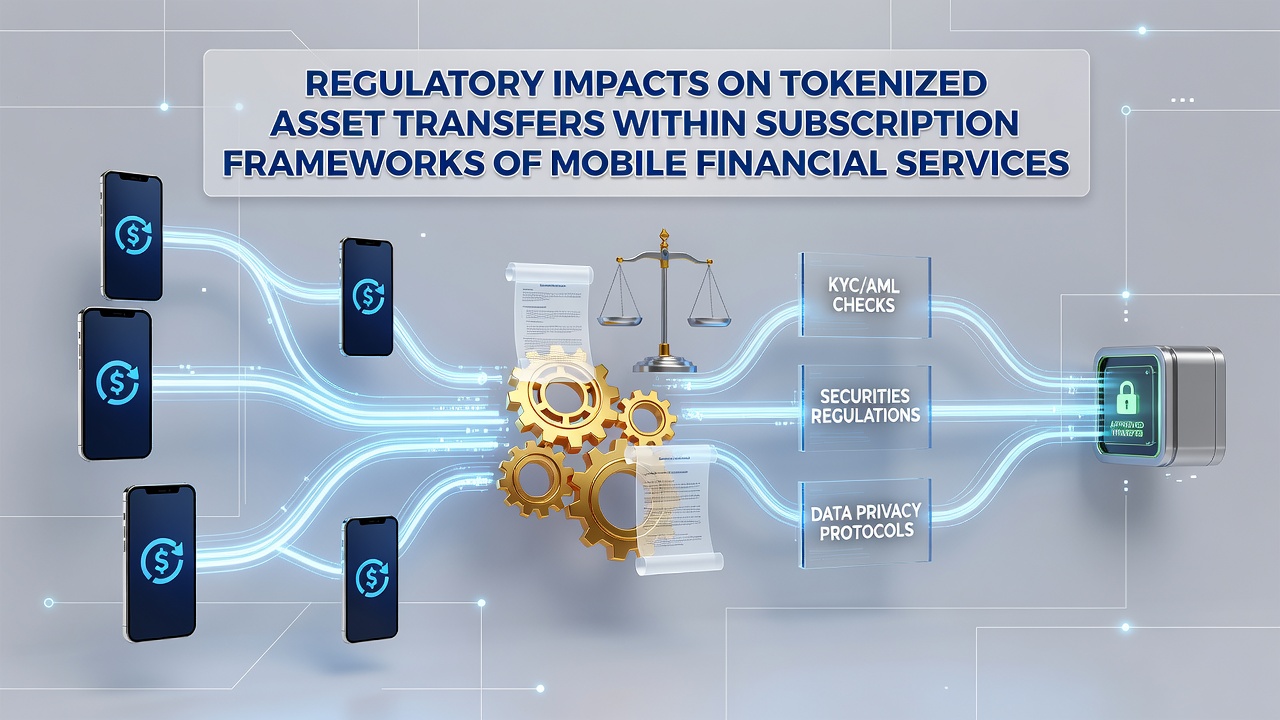
Regulatory Impacts on Tokenized Asset Transfers Within Subscription Frameworks of Mobile Financial Services
Tokenized assets now play a growing role in subscription models delivered through mobile financial services, and regulatory bodies across multiple regions have introduced measures that directly influence how those assets move between parties. Data from industry reports shows that by October 2026 several jurisdictions had updated rules on digital asset custody and transfer protocols, creating new compliance layers for operators who manage recurring payments. Those updates affect everything from wallet integrations to settlement timelines, yet the core requirement remains consistent: transfers must occur within defined legal boundaries that protect both service providers and end users.
Core Regulatory Mechanisms Shaping Transfers
Authorities in the European Union implemented the Markets in Crypto-Assets regulation, which sets licensing standards for entities handling tokenized value within subscription cycles, while similar frameworks emerged from the Monetary Authority of Singapore and the Australian Securities and Investments Commission. These rules require mobile financial platforms to verify asset provenance before any recurring deduction occurs, and they mandate real-time reporting when tokenized units cross borders. Observers note that such requirements have increased processing times for initial setup, although subsequent automated renewals often run more smoothly once initial checks clear.
North American regulators have focused on custody and disclosure obligations. The U.S. Securities and Exchange Commission issued guidance clarifying that certain tokenized subscription rights fall under existing securities definitions, prompting mobile service providers to adjust their transfer mechanisms accordingly. Meanwhile, the Bank of Canada released updated expectations for digital asset custodians operating in cross-border subscription networks, emphasizing segregation of client holdings and audit trails that span multiple billing periods.
Effects on Subscription Frameworks
Subscription models built around tokenized assets must now accommodate variable compliance checkpoints that differ by jurisdiction. Research indicates that platforms operating in multiple markets have adopted modular transfer engines capable of applying jurisdiction-specific rules without disrupting the user experience on mobile devices. These engines typically validate wallet addresses, confirm regulatory status of the asset, and log each movement in distributed records that satisfy audit demands from bodies such as the European Central Bank.
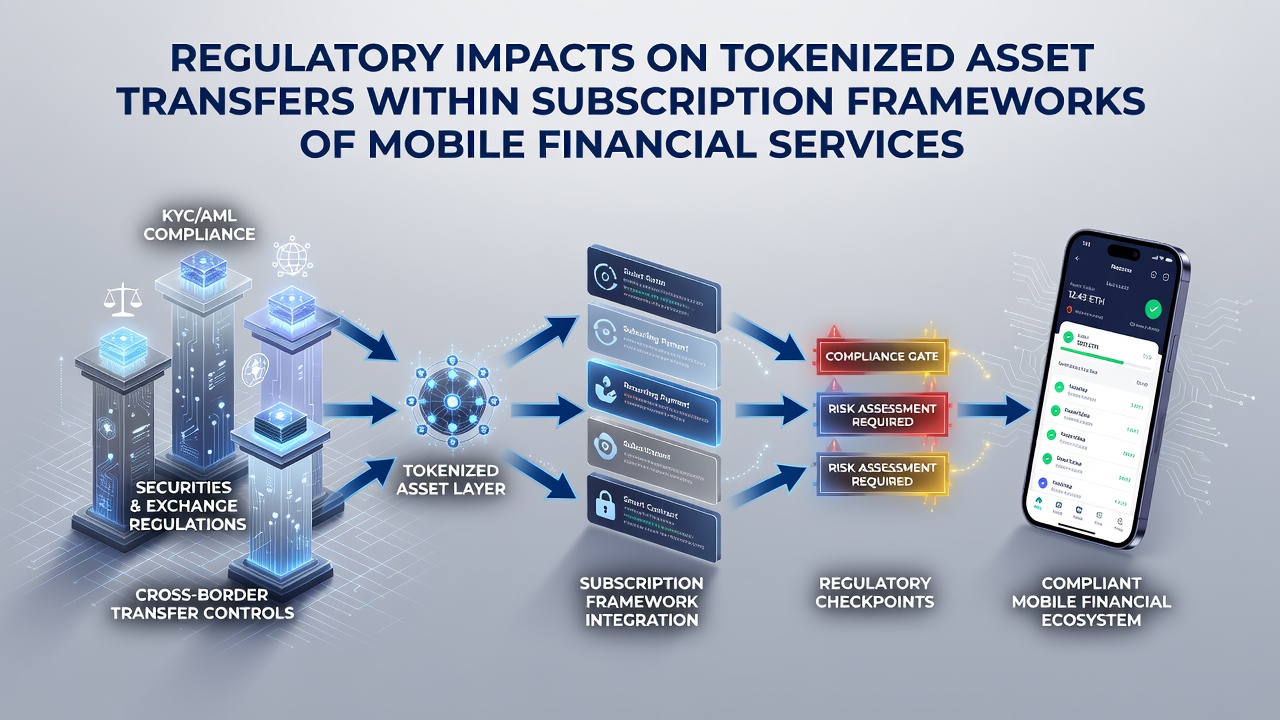
Operators report that integration with regulatory reporting APIs has become standard practice. In practice this means a transfer request triggers an automated sequence: the system checks against sanctioned lists, confirms the asset meets local tokenization standards, and routes the transaction through approved channels before the subscription renewal completes. Those who have studied implementation timelines note that platforms adopting these sequences early encountered fewer service interruptions during the October 2026 regulatory transition window.
Operational Adjustments in Mobile Financial Services
Mobile financial service providers have responded by embedding compliance logic directly into their application layers. This approach allows tokenized asset transfers to occur seamlessly during subscription renewals, yet it requires continuous monitoring of regulatory updates issued by agencies such as the Financial Conduct Authority in the United Kingdom and the Japan Financial Services Agency. Data from platform audits shows that firms maintaining dedicated regulatory tracking teams experienced shorter adaptation periods when new transfer restrictions took effect.
Interoperability between different mobile wallet standards also faces regulatory scrutiny. Rules now often stipulate that tokenized units used in subscriptions must remain compatible with approved settlement rails, which has led developers to redesign transfer protocols to include fallback mechanisms when primary channels encounter compliance blocks. Such redesigns frequently involve collaboration with academic research centers studying blockchain governance, including work published by the MIT Media Lab on scalable regulatory interfaces.
Future Outlook and Compliance Trends
Looking ahead, regulators continue to refine definitions around fractional ownership of tokenized assets within recurring payment structures. Recent statements from the Reserve Bank of Australia highlight plans to introduce standardized transfer identifiers that mobile services must adopt by late 2027, aiming to reduce ambiguity in cross-border subscription flows. These identifiers would accompany each asset movement, creating verifiable chains that satisfy both domestic and international oversight bodies.
Industry organizations have begun publishing comparative analyses of regulatory approaches, enabling service providers to anticipate shifts before they become mandatory. The pattern emerging across regions suggests that successful navigation of these rules depends on maintaining flexible transfer infrastructure capable of incorporating new requirements without halting ongoing subscription cycles.
Conclusion
Regulatory developments continue to define the boundaries within which tokenized asset transfers operate inside mobile subscription frameworks. By October 2026 the cumulative effect of licensing, custody, and reporting mandates had produced measurable changes in processing workflows across multiple jurisdictions. Service providers that align their systems with these evolving standards maintain operational continuity, while those that delay adaptation encounter increased friction during renewal sequences. The landscape remains dynamic as authorities refine their approaches, yet the emphasis on verifiable, compliant transfers persists across all examined markets.